
Flatbed vs. Wheel-Lift Towing: Which One Actually Protects Your Car?
Quick Answer: Flatbed towing carries your entire vehicle on a raised platform, so no wheels touch the road and no drivetrain component keeps spinning during the trip. Wheel-lift towing raises only one end of the car on a hydraulic yoke while the other end rolls behind on its own tires. Flatbed is the safer default for all-wheel-drive and four-wheel-drive vehicles, low-clearance cars, motorcycles, and anything already damaged from a collision. Wheel-lift works well for short local tows of standard front-wheel-drive or rear-wheel-drive cars, and it fits into tighter spaces a flatbed can't reach. The method that protects your car depends less on preference and more on your vehicle's drivetrain and how far it's going.
A tow truck pulls up and you notice it isn't what you pictured. Instead of a flat, open deck, it's got a metal arm and a pair of hooks that slide under your tires, lifting one end of your car into the air while the other end stays on the pavement. Neither setup is wrong — they're different tools built for different jobs, and knowing which one your car actually needs is the difference between a routine tow and an unplanned trip to the transmission shop.
What a Flatbed Tow Truck Actually Does
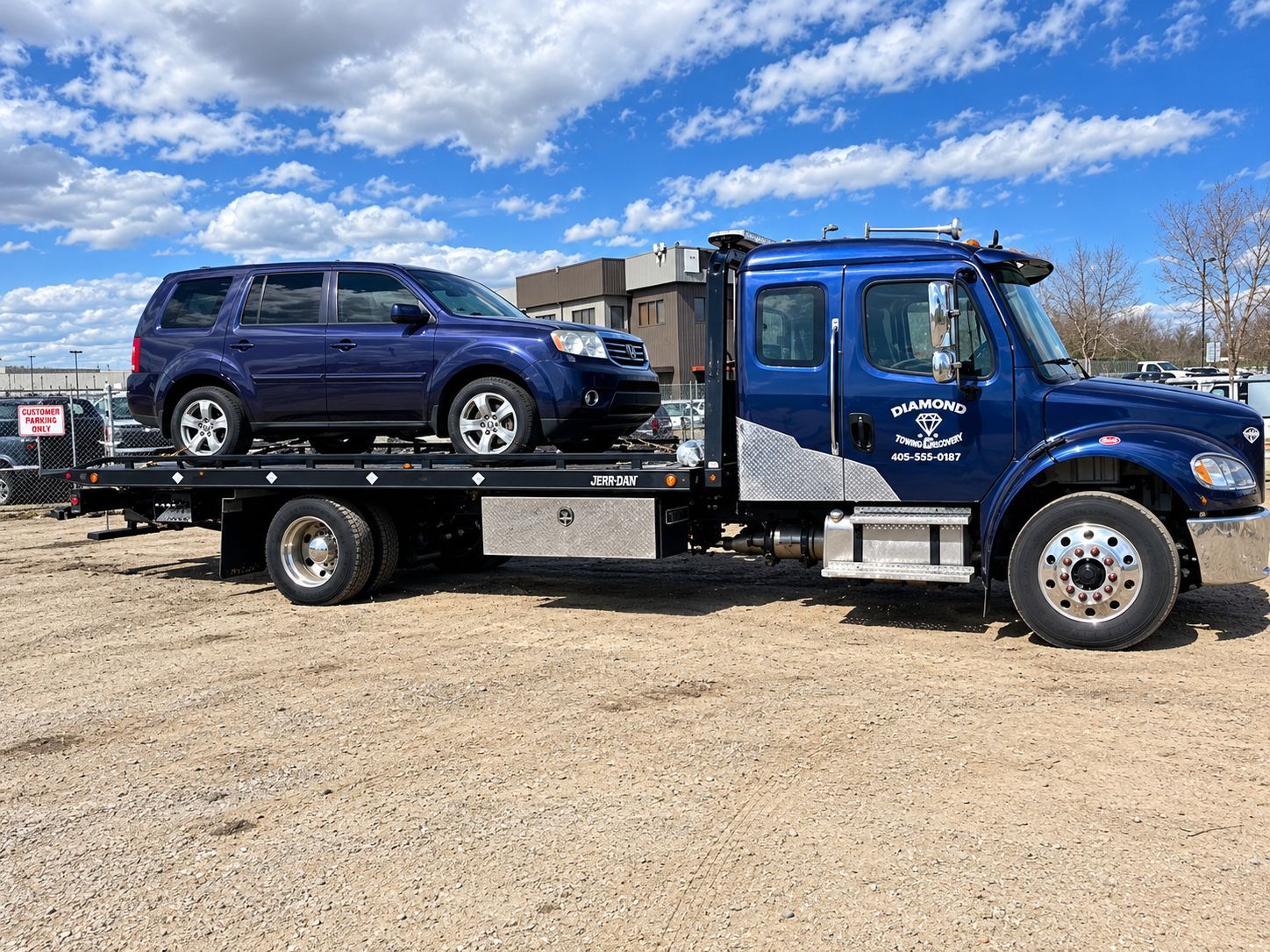
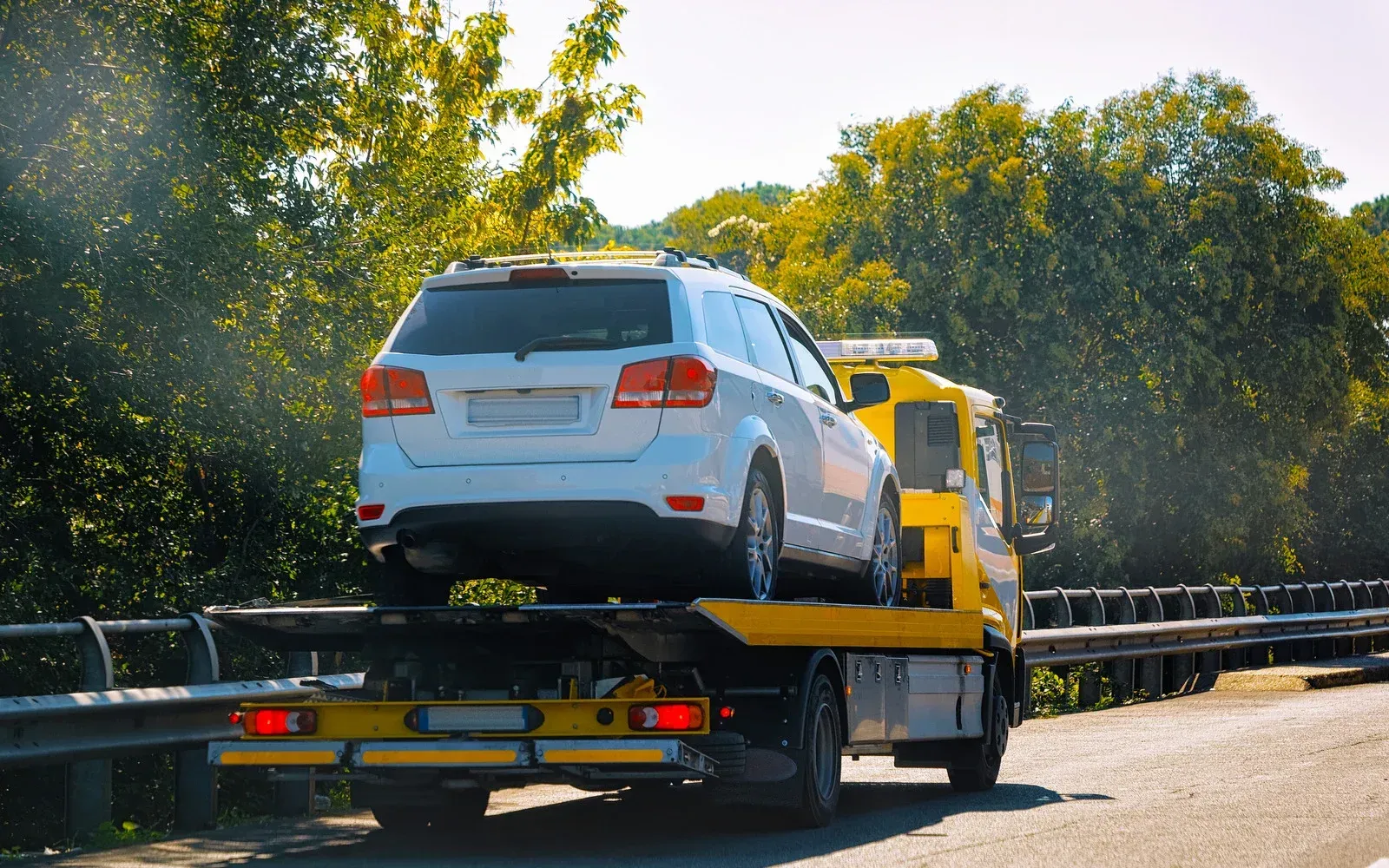
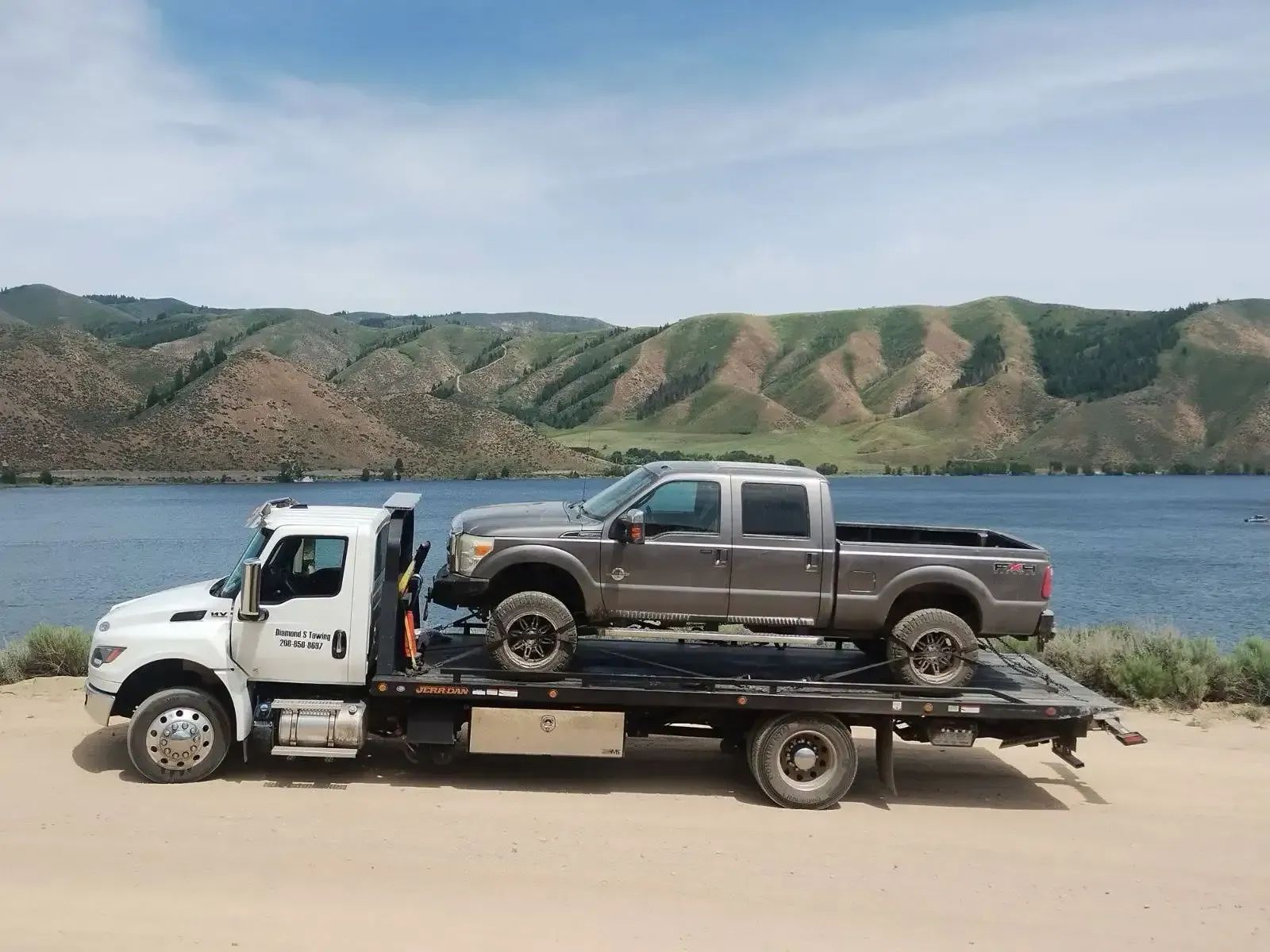
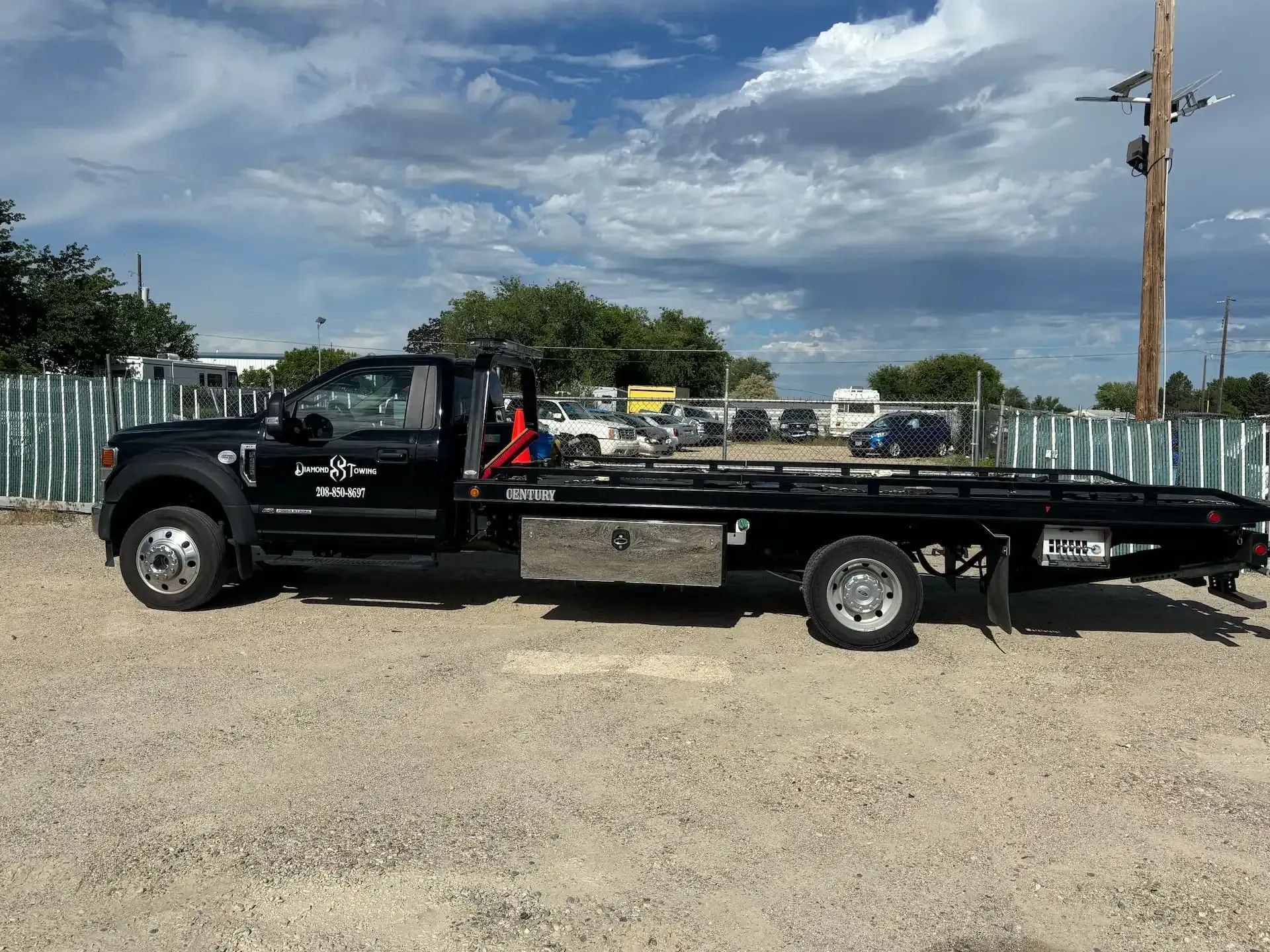
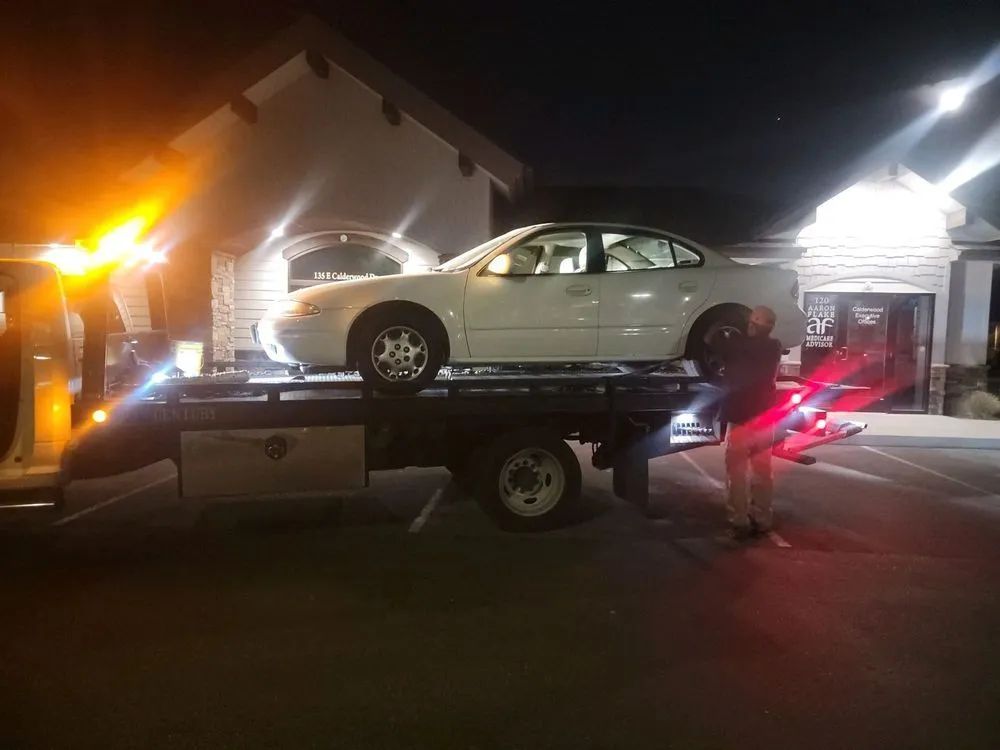
A flatbed is exactly what it sounds like: a hydraulic bed mounted on the truck that tilts down to ground level, either so the car can be driven onto it under its own power or so a winch can pull it up when it can't move on its own. Once the vehicle is fully on the platform, the bed levels out and the car gets locked down with straps and chains at all four contact points.
The defining feature isn't the flat deck — it's that all four wheels leave the ground. Nothing about your car stays connected to the road once it's loaded, so no axle spins and no transmission does any work for the length of the trip.
That single fact is why flatbeds show up as the recommended method for so many vehicle types: all-wheel-drive and four-wheel-drive cars, low-riding sports cars and luxury vehicles, anything with collision damage that might not roll straight, and motorcycles that have no business balancing on two wheels behind a moving truck. When a vehicle can't tolerate having any wheel drag or turn under load, a flatbed removes the question entirely.
What a Wheel-Lift Tow Truck Actually Does
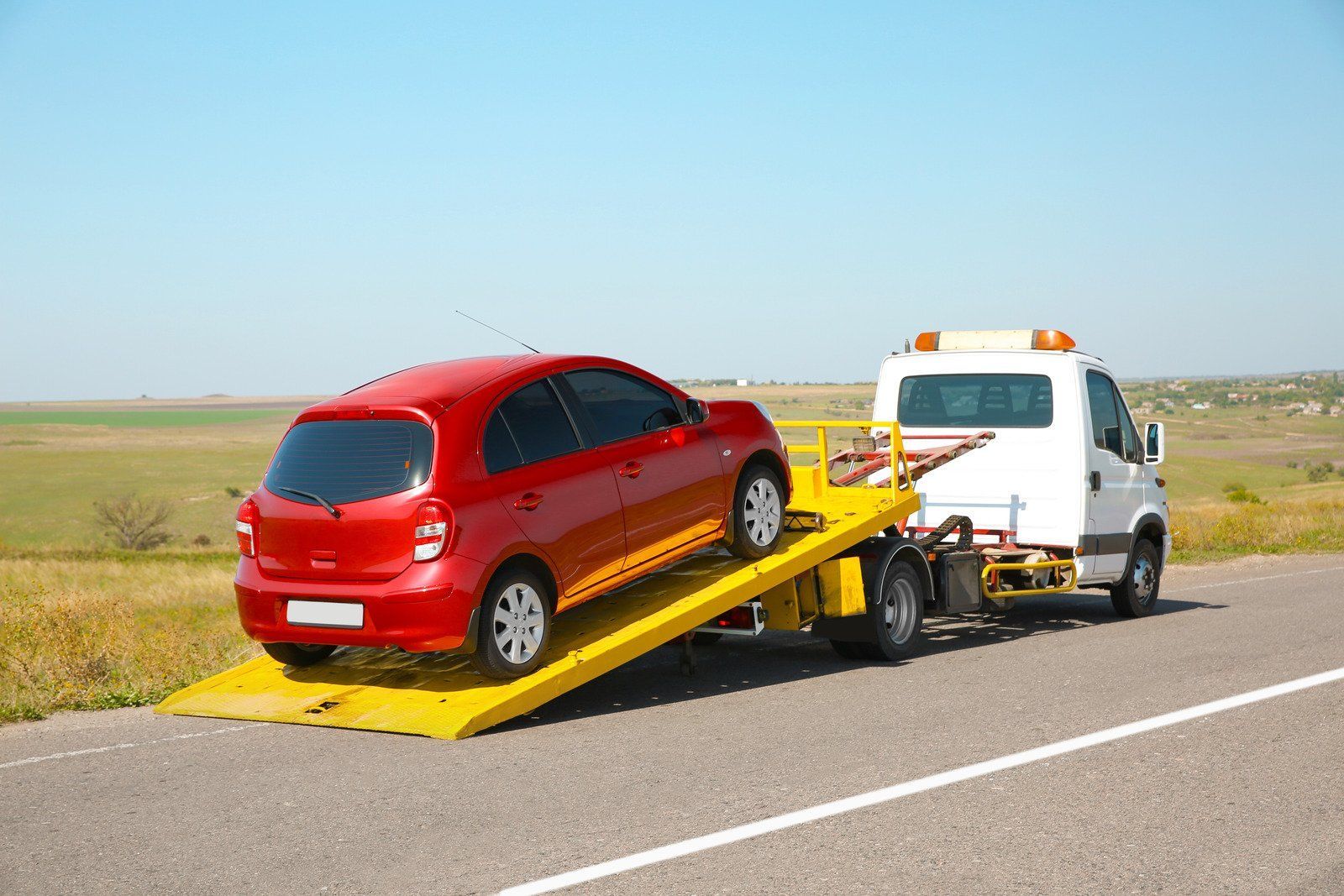
A wheel-lift truck uses a hydraulic boom with a metal yoke that slides under the front or rear tires and cradles them, then lifts that end of the car a foot or two off the ground. The other end of the vehicle stays on the pavement and rolls freely behind the truck for the length of the tow.
This is a faster hookup than a flatbed in most cases — the operator backs the yoke into place, cinches it around the tires, and lifts. No driving onto a ramp, no strapping down four corners. That speed, plus the smaller footprint of the truck itself, makes wheel-lift a common choice for short local tows and for pulling a car out of a driveway or alley a flatbed can't maneuver into.
The end that gets lifted matters. A front-wheel-drive car needs its front tires lifted so the driven front wheels stay off the road, letting the free-rolling rear tires trail behind. A rear-wheel-drive car needs the opposite — rear tires up, front tires rolling. Get this backward and you're dragging the driven axle down the road. That's exactly the kind of mistake that turns a routine tow into a transmission repair.
Most operators catch this before the truck ever moves. But it's worth checking yourself if you're standing there watching the hookup happen.
Why the Drivetrain Is the Real Dividing Line
The choice between flatbed and wheel-lift isn't really about the car's size or the distance it's traveling first — it's about how many wheels are connected to the drivetrain and whether any of them will be forced to roll while the engine and transmission sit idle.
On a standard front-wheel-drive or rear-wheel-drive car, only one axle is doing the work. Lift that axle correctly on a wheel-lift truck and the other end rolls harmlessly, with nothing spinning any internal gearing that isn't designed for it. It's a workable setup for a short trip across town.
All-wheel-drive and four-wheel-drive vehicles change the math entirely. Every wheel on those vehicles is mechanically tied to the transmission or transfer case through some combination of driveshafts and differentials. Tow one with a wheel-lift truck — even with the "correct" end lifted — and the two wheels still touching the road are forcing motion through a drivetrain that was never designed to turn without the engine also running and lubricating everything inside it. Depending on the vehicle, that can wear down seals and bearings on a short tow or cause serious transfer case or transmission damage on a longer one. Manufacturers of AWD and 4WD vehicles are consistent on this point: unless the driveshaft is physically disconnected, these vehicles need to be transported with all four wheels off the ground.
Electric and hybrid vehicles carry a version of the same rule for a different reason. Many EVs use electric motors at one or both axles that generate current when the wheels turn without the vehicle being powered on — the tow ends up acting like unwanted regenerative braking. That can overheat components never built to handle it. And a flatbed sidesteps the whole problem, because nothing on it turns at all.
TIP: If you're not sure whether your vehicle is AWD, 4WD, or has a hybrid drivetrain, check your owner's manual or the badge on the trunk or tailgate before the tow truck arrives. Telling the dispatcher up front means the right truck gets sent the first time instead of a second truck getting dispatched after the first one shows up and can't safely load your car.
When Wheel-Lift Towing Makes Sense
Wheel-lift isn't a lesser option — it's the right call in plenty of situations. A standard front-wheel-drive sedan or rear-wheel-drive truck being moved a short distance, say from a Meridian parking lot to a nearby shop, is a textbook wheel-lift job. The hookup is quick, the truck can squeeze into a tighter space than a flatbed could manage, and there's no drivetrain risk when the correct axle gets lifted.
It's also a practical choice when a vehicle is stuck somewhere a flatbed can't reach — a narrow alley, a cramped apartment garage, or a spot boxed in by other parked cars. The smaller wheel-lift rig can back into places a full-length flatbed simply doesn't fit.
Where wheel-lift falls short is distance and vehicle condition. The rolling end of the car is still riding on its factory tires and suspension for the whole trip, which is fine for a few miles on city streets but adds unnecessary wear over a long highway haul. It's also not the right tool for a car that's been in a collision and might not track straight, since a wheel-lift truck relies on those trailing wheels rolling normally.
When Flatbed Is the Only Safe Choice
Some vehicles don't get a choice between the two methods — flatbed is the only option that makes sense. All-wheel-drive and four-wheel-drive vehicles top that list for the drivetrain reasons already covered. Electric and hybrid vehicles are right behind them.
Low-clearance cars are another clear case. Sports cars, lowered vehicles, and some luxury sedans sit close enough to the ground that a wheel-lift yoke can scrape the front or rear fascia just getting into position, and dragging that low bumper over even a small dip in the road at pickup or drop-off can crack a fascia that costs real money to replace. A flatbed's ramp angle and full-platform loading avoid that entirely.
Motorcycles need a flatbed by default — there's no version of wheel-lift towing that works for a two-wheeled vehicle with no ability to balance itself while trailing behind a truck. Accident-damaged vehicles belong on a flatbed too, since a car that's been hit hard enough to need a tow may have a bent wheel, damaged suspension, or misaligned frame that won't roll straight or safely on its own tires.
WARNING: Never let anyone tow an all-wheel-drive, four-wheel-drive, electric, or hybrid vehicle with a wheel-lift truck unless the driveshaft has been physically disconnected by a qualified operator. This isn't a minor risk — drivetrain damage from an improper tow often doesn't show up until days later, and by then it can be difficult to prove what caused it.
What Happens When the Wrong Method Gets Used
The consequences of mismatched towing aren't always immediate. A wheel-lift tow on an AWD vehicle might not throw a warning light that same day. What often happens instead is a slow decline — a whine from the transfer case a week later, a vibration at highway speed a month after that. By then, good luck connecting it back to a single tow.
Not the kind of thing you notice right away. That's what makes it worse.
Flatbed misuse causes different problems. Loading a low-clearance car at the wrong ramp angle, or securing straps to the wrong anchor points, can crack a front splitter or damage rocker panels — cosmetic, but avoidable with the right equipment and an operator who checks a specific vehicle's hard points before hooking anything up.
Treasure Valley Conditions That Change the Calculation
Where you're stranded matters as much as what you're driving. A car that's slid off an icy stretch outside Boise in January is often sitting at an angle, partly in a ditch, with the front or rear end lower than the other — a scenario where a winch and a flatbed's ramp angle give an operator far more control than a wheel-lift yoke would in the same spot. Gravel roads and rutted pullouts common around Kuna, the Owyhees, and the routes up toward McCall can also hide sharp rocks or deep ruts that make a low wheel-lift yoke risky to position correctly.
Distance plays a role too. A short tow within Boise or Nampa is a reasonable wheel-lift candidate for the right vehicle. A longer haul out toward Mountain Home or across the state line to Ontario puts a lot more rolling miles on whatever tires are still touching the ground, which tips the balance toward flatbed even for a vehicle that could technically go either way.
Summer heat adds one more variable. Idaho pavement in July pushes tire temperatures well above a cooler day's baseline, and a wheel-lift tow over any real distance adds friction-generated heat on top of that. For a longer summer tow, flatbed keeps every tire at rest instead of adding load to already-hot rubber.
Frequently Asked Questions
How Do I Know If My Car Needs A Flatbed Instead Of Wheel-Lift?
Check the drivetrain first. AWD, 4WD, electric, and hybrid vehicles generally require flatbed towing unless the manufacturer permits another method. Low-clearance, luxury, and collision-damaged vehicles are also better suited to flatbeds.
Can A Wheel-Lift Truck Damage My Transmission?
Yes. Lifting the wrong axle can force driven wheels to spin and potentially damage transmission components. AWD and 4WD vehicles are particularly vulnerable when wheel-lift towing is performed without proper drivetrain disconnection.
Is Flatbed Towing Safer For Long-Distance Trips?
Generally, yes. Flatbed towing keeps every wheel off the pavement, eliminating tire wear and preventing drivetrain components from spinning during transport, making it a safer option for longer highway journeys.
Why Did The Tow Truck Ask What Kind Of Drivetrain My Car Has?
Your drivetrain helps determine which towing method is appropriate. Knowing whether your vehicle is FWD, RWD, AWD, or 4WD allows the dispatcher to send equipment that can transport it safely.
Can Motorcycles Be Towed With A Wheel-Lift Truck?
No. Motorcycles generally require a flatbed or specialized motorcycle towing equipment. Because they have only two wheels, they cannot safely trail behind a conventional wheel-lift truck without proper support and stabilization.
What If I Don't Know Whether My Car Is AWD Or 4WD?
Check the vehicle badge or owner's manual for drivetrain information. If you're still unsure, provide the tow company with your vehicle's year, make, and model so they can determine the appropriate equipment.
Choosing The Right Tow Truck Matters
The right towing method depends on your vehicle, its drivetrain, and the conditions surrounding the tow. Flatbeds provide the most protection by keeping every wheel off the pavement, while wheel-lift trucks remain practical for properly matched short-distance tows. Understanding that difference can help prevent unnecessary tire, suspension, transmission, or drivetrain damage and make an already stressful roadside situation easier to manage from the start.
For drivers in Boise and Nampa, ID, Diamond S Towing & Recovery
brings 20
years of
towing experience
to every vehicle it handles. Careful equipment selection and proper loading help ensure your car is moved according to its design and condition, whether you're dealing with a routine breakdown, collision, or longer-distance transport. That attention to the details helps keep the towing process straightforward and your vehicle protected along the way.