
How Professional Towing Prevents Further Damage to Your Vehicle?
You are parked on the shoulder with your hazards ticking, traffic sliding past the window, and a car that simply will not move. Maybe the transmission let go on the way home. Maybe you slid off an icy on ramp and the front wheels are buried in frozen mud. Most drivers fixate on the breakdown itself. What matters more is the damage that has not happened yet.
A stalled engine or a flat tire is usually a contained problem, and
professional towing is built to keep it that way. The trouble grows when the car gets moved the wrong way: dragged on locked wheels, hooked to the wrong part of the frame, or rolled onto a truck with its drive wheels still spinning a dead transmission. After years pulling cars out of ditches and off canal banks, you learn that most of the worst damage we see never came from the failure. It came from the rescue. The next few minutes decide whether you walk away with one repair or three.
What to do the moment your car stops moving
Get clear of moving traffic first, then worry about the car. If it still rolls, ease it onto the shoulder or into a lot, switch on your hazards, and put real distance between the car and live lanes. After that, four things help us protect it.
Leave it in park with the wheels straight, and skip the parking brake if the car might need to be rolled or winched, because a locked wheel becomes a dragged wheel. Find out what drives your wheels, since front, rear, or all wheel drive changes how the car should leave the scene. Check the tires and the ground too, since a flat, a seized brake, or a wheel sunk in mud tells us which truck to send. And keep everyone off the traffic side of the guardrail.
WARNING: The shoulder is the most dangerous place on any road. Do not stand behind or beside your car in live traffic, and never let a friend flat tow you on a chain at speed. A car on a rope has no brakes or steering, and on a wet or icy ramp it will swing straight into the lane beside you.
TIP: Before we roll up, check whether your wheels spin freely by hand and whether the car is front, rear, or all wheel drive. Those two answers tell us whether your car rides flat on the bed or lifts on a cradle.
How a wrong tow turns a small problem into a big one
The most expensive towing damage starts with one move: rolling a car on its drive wheels while the engine is off. A running engine pumps fluid through the transmission to cool it and keep the gears slick. Tow that car with the drive wheels turning and the engine dead, and the transmission spins with nothing circulating through it. Metal grinds on dry metal. A few miles of that can cook a transmission that was healthy when the car quit.
All wheel drive cars are the worst case, because every wheel feeds the drivetrain. Roll one on a wheel lift with two tires still on the road and you can ruin the center differential before you reach the shop. So an all wheel drive car belongs flat on a bed, every wheel off the ground.
The frame is the other common miss. Hook a chain to a control arm, a bumper bracket, or an exhaust pipe instead of a rated tow point, and you trade a dead battery for a bent suspension arm or a cracked bumper cover. We see it most after a quick favor with a pickup and a strap. The strap holds. The part it was wrapped around does not.
What professional towing does differently
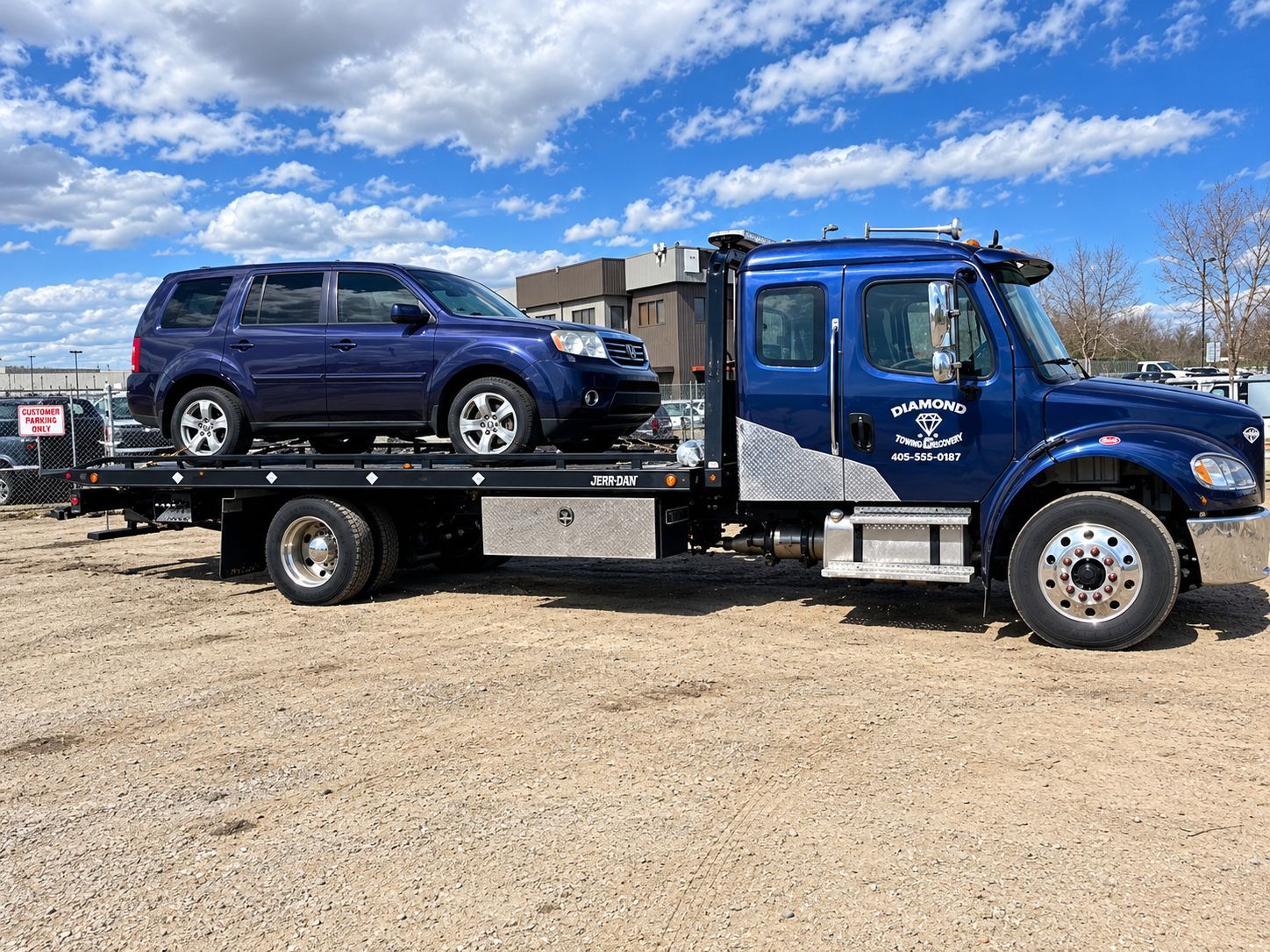
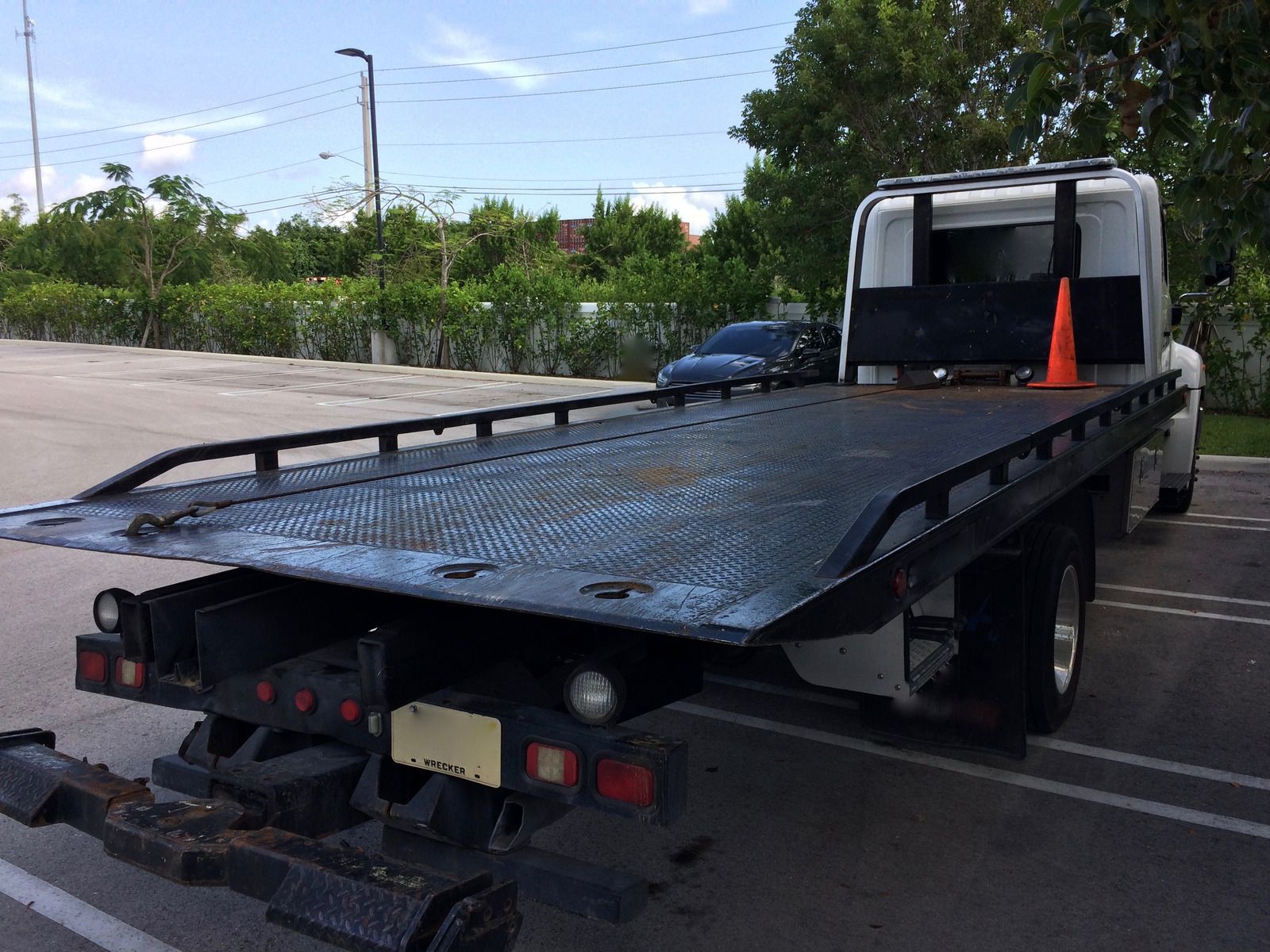
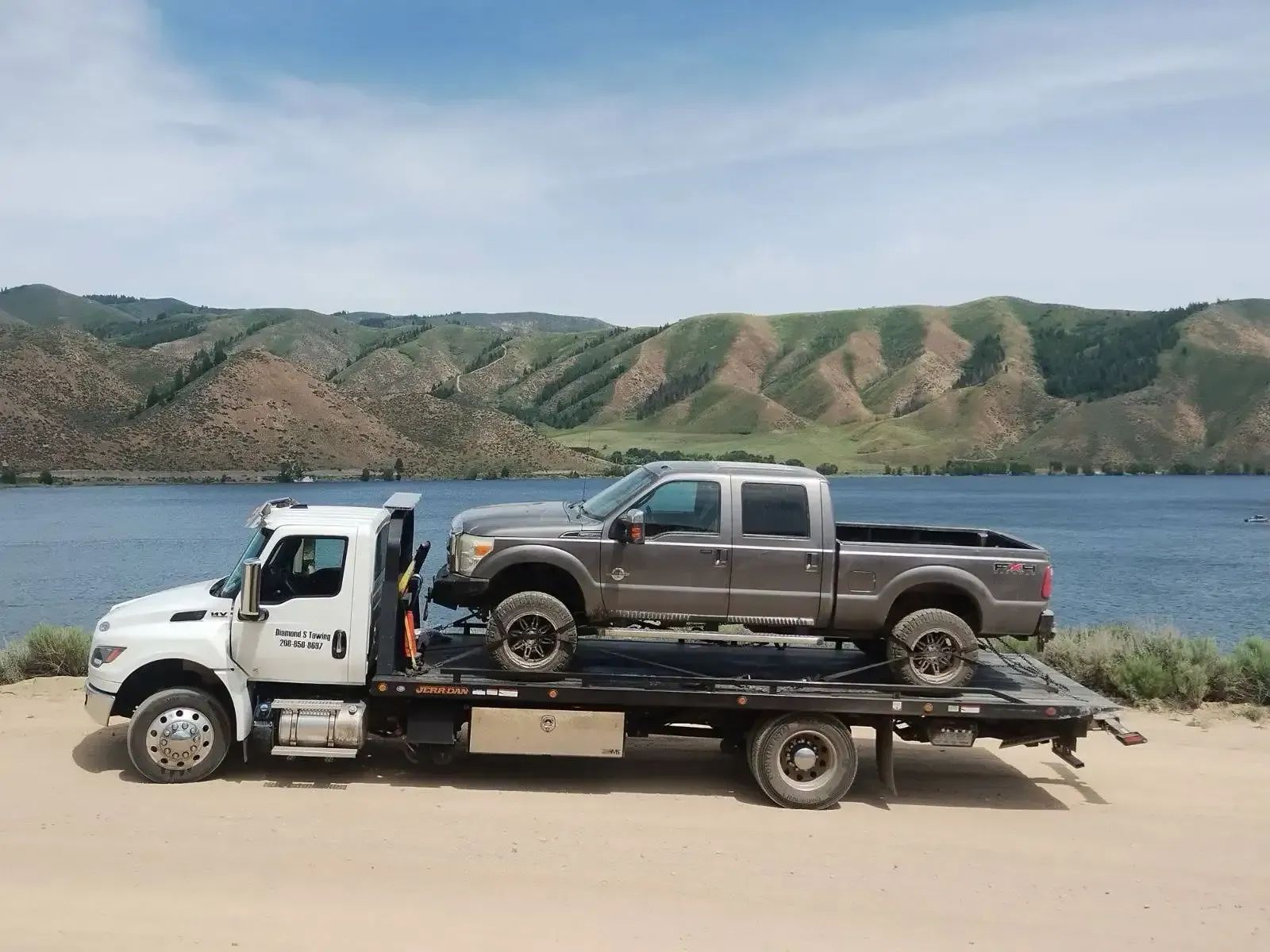
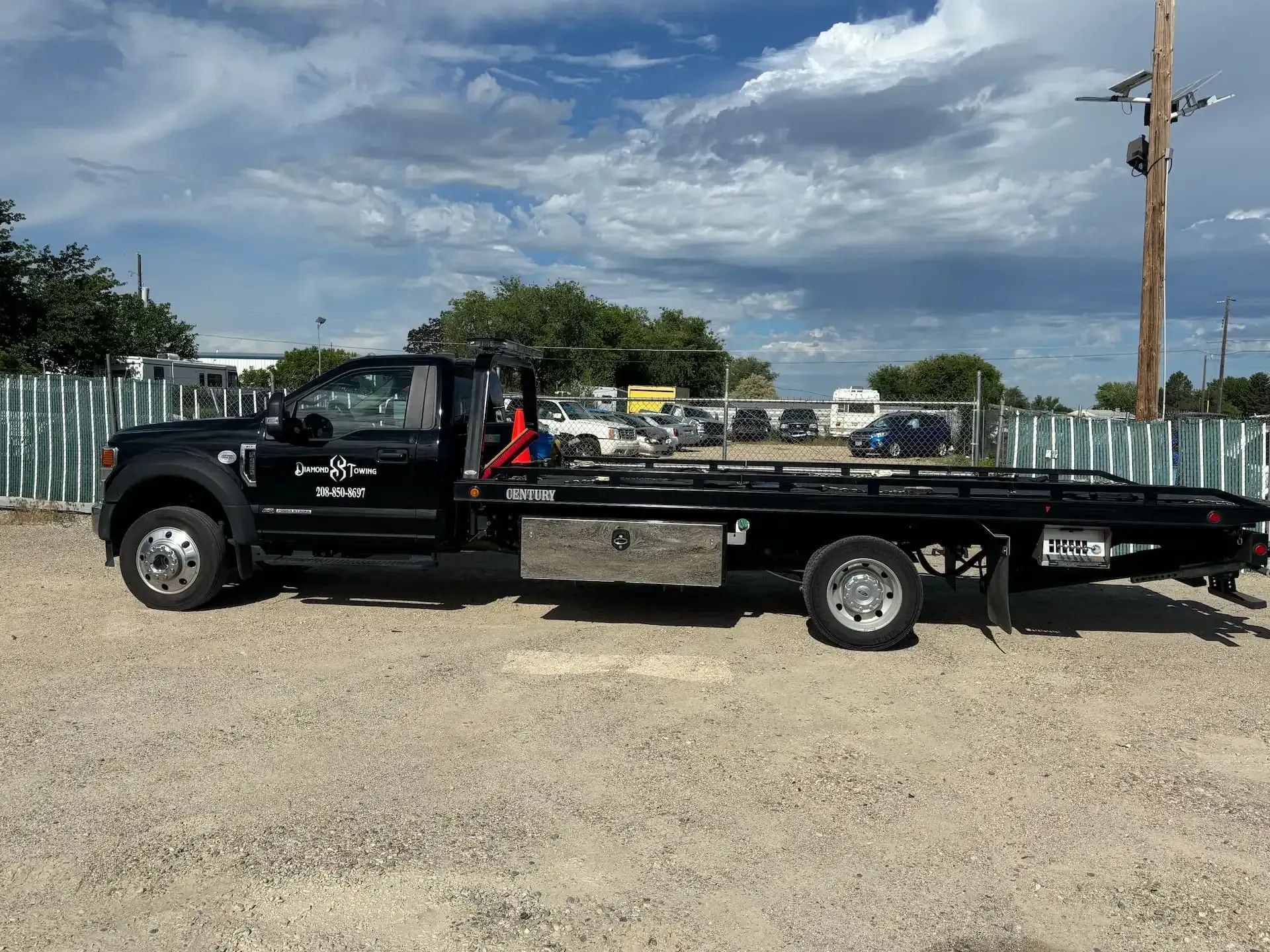
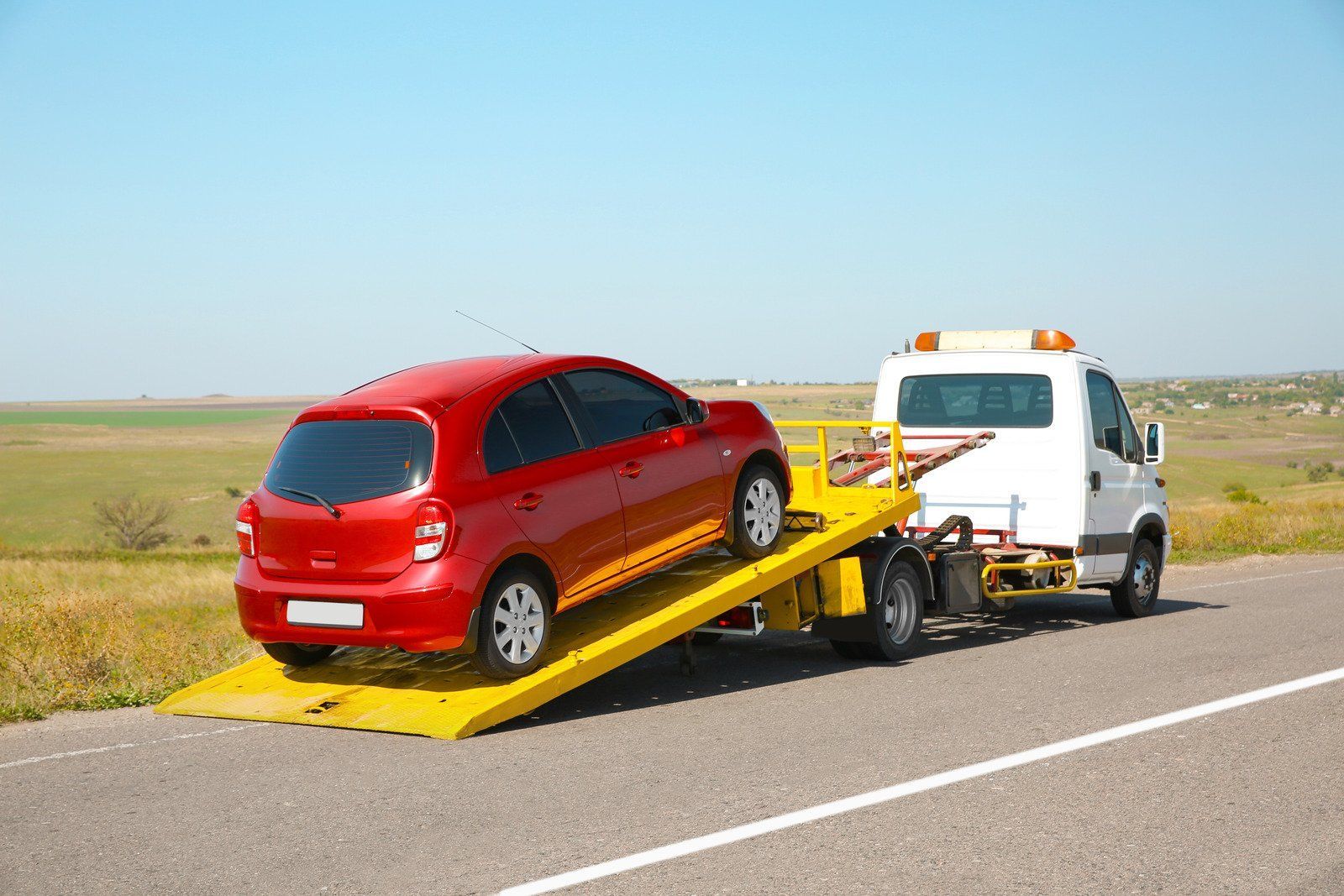
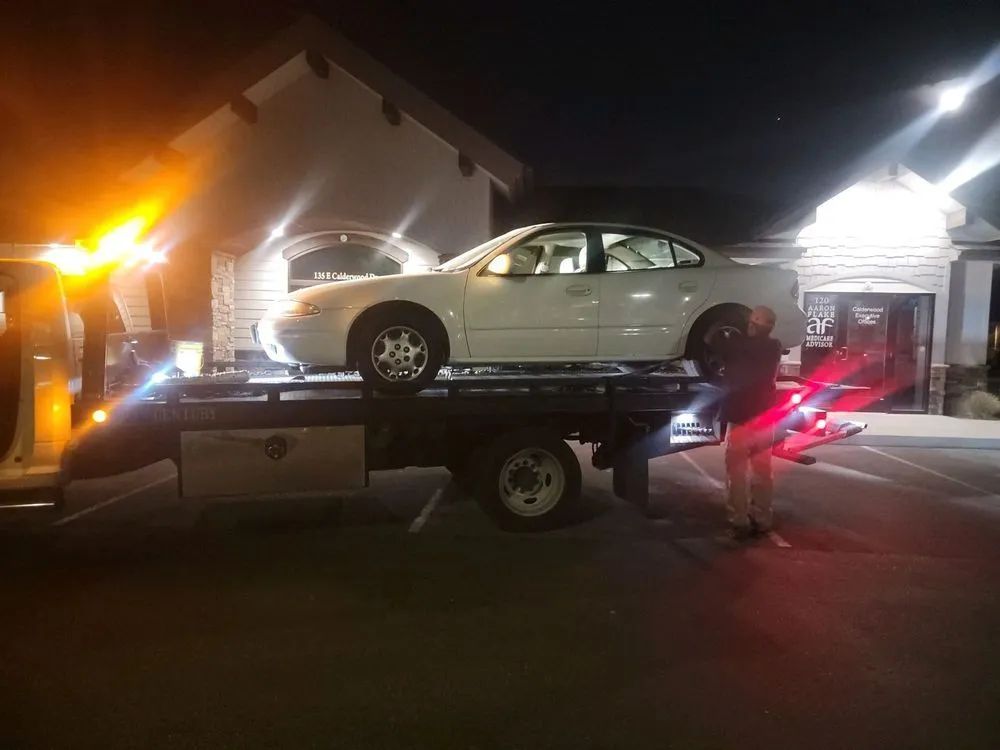
The right equipment depends on your car, not on whatever truck is closest. A flatbed, where the whole car rides up on a tilting deck, is the safest choice for most calls and the only safe one for all wheel drive, low clearance, or badly damaged vehicles. Nothing drags, nothing spins, and the straps pull from the wheels, not the suspension.
A wheel lift cradles two wheels and raises them clear, which works for short moves when the drive wheels come up. Front wheel drive car? Lift the front. Rear wheel drive? Lift the rear so the driveshaft sits still. Get that backward and you are back to spinning a dead transmission. Low cars need care too, so we lay down boards to flatten the approach and keep a front lip off the bed.
What winter and rough ground do to a recovery
Cold mornings are when the calls stack up. Ice on an on ramp or a bridge deck sends cars into the ditch nose first, and a car buried in frozen mud is not a simple hook and go. Drag it straight out with a chain and you can peel a bumper off or tweak the lower control arms. We set the winch line at the right angle and take the strain slowly, letting the car follow its own tracks out so the suspension never takes a side load.
Canal banks and soft shoulders are the other trap. The ground looks solid until a front tire breaks through the crust, and now half the car's weight hangs on one corner. Rush that and panels crease. Summer flips it: pavement bakes, soft tires start to flat spot, and a car that overheated needs to cool before it moves so a warped head does not become a cracked one. On steep grades we chain to all four wheels, not the body, so nothing shifts on the way down.
Keeping a breakdown from snowballing into a bigger repair
Most towing damage is preventable in the first ten minutes, and it comes down to slowing down. The instinct when your car dies is to get it moving again right now, by any means. That instinct is exactly what bends fenders and burns transmissions.
Keep your drivetrain type and tow points written in the glovebox, so you can answer fast when help arrives. Skip the favor tow unless the car rolls on free wheels and the trip is across a lot, not down a road. If the wheels will not turn, the car sits low, or all four wheels drive, ask for a flatbed by name. And if the engine ran hot, let it sit. Patience on the shoulder saves a teardown later.
Frequently Asked Questions
Can I tow my all wheel drive car with a regular wheel lift?
No. An all wheel drive car needs every wheel off the ground, so it rides on a flatbed. Leaving two wheels turning spins the drivetrain with no engine running to keep fluid moving. That dry friction can destroy the center differential and transfer case before the car ever reaches the shop. We send a flatbed.
Is it safe to flat tow my car behind a truck with a strap?
Rarely. A strapped car has no power brakes or steering, so it swings on corners and cannot stop on its own. On a wet or icy ramp, that turns dangerous in a hurry. Save strap tows for free rolling cars moving a short distance across flat, private ground, and never out on an open road.
Why does the tow operator care where the chain attaches?
Because the wrong spot bends metal. Hooking a chain to a control arm, a bumper bracket, or an exhaust pipe trades a dead car for a bent suspension arm or a cracked cover. We attach only to rated tow points, or we pull from the wheels, so the load always runs through strong, solid structure.
How long does a proper recovery take?
It depends on the situation, but a clean roadside pickup usually takes well under an hour from the moment you call. A car stuck deep in a ditch or hung off a canal bank takes longer, because rushing a winch recovery is exactly how the rescue itself ends up causing fresh damage to your vehicle.
Does winter weather change how my car should be towed?
Yes. Ice sends cars nose first into ditches, and frozen mud grips the bumper like glue, so we winch slowly along the car's own path instead of yanking it free. Cold also stiffens every fluid in the drivetrain, which is one more reason a flatbed beats dragging a car across icy ground in deep winter.
Trusted Towing That Protects Your Vehicle Every Mile
Read the situation before you let anyone move the car, because the breakdown rarely ends a vehicle and the rushed rescue does. That risk climbs on icy on ramps, soft canal banks, and steep grades where one wrong hookup turns a single repair into three. For 20
years, Diamond S Towing & Recovery
has pulled cars and trucks out of exactly these spots across Boise & Nampa, Idaho. We match the truck to your car, load all wheel drive and low clearance vehicles flat, and chain to the wheels so your suspension and transmission reach the shop intact. When your car stops moving and the next move matters, call us before anyone reaches for a chain.